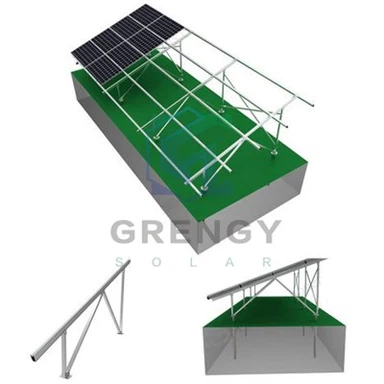




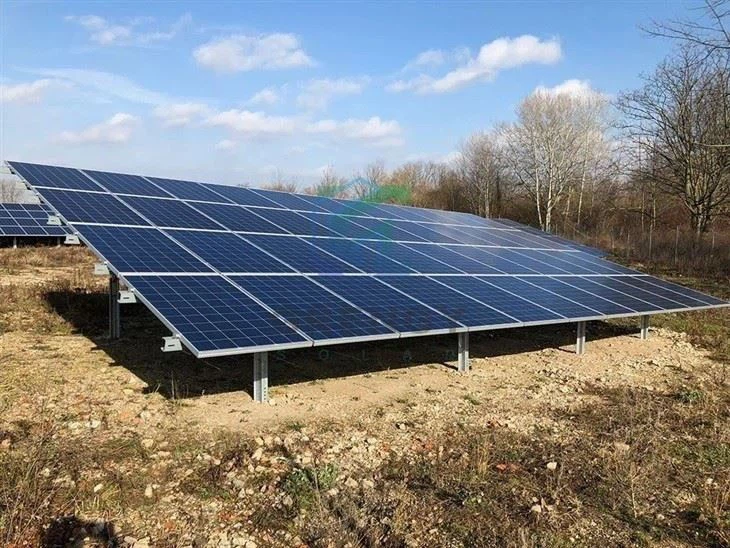
Ground Mount Solar Panel Racking Systems
Material: Aluminum 6005-T5 & HDG or ZAM Steel
Max Wind Load: According to the projects request
Max Snow Load: According to the projects request
Solar Module Orientation: Portrait or Landscape
Application:Ground or Farm
Pre-assembled parts at the factory, fast and easy to install
OEM & Sample: Available
OEM & Sample: Available
- Fast Delivery
- Quality Assurance
- 24/7 Customer Service
Product Introduction
Xiamen Grengy Photovoltaic Technology Co., Ltd
Founded in 2007. It has a professional R&D team and 150 employees. Specializing in PV products like ground and roof brackets, it offers customized solutions. With business in over 100 countries, it holds multiple patents and certifications such as UL, TUV, CE, being a leading exporter.
Professional team
Our professionals have in-depth knowledge and rich experience in the field of photovoltaic technology, enabling the company to keep up with the international advanced level in product R & D and innovation
Certifications and Standards Compliance
The company's reputation is enhanced by its compliance with a wide range of international and domestic certifications. Having successfully passed UL, TUV, CE, CQC, SAA, AS/NZS1170

1000+
Projects completed
100+
Exported Countries
10GW+
Total Installed Capacity
60+
Patents
For more details, pls email:rukin@grengysolar.com
Ground-mount solar panel racking systems have a variety of specifications that are important to consider for their proper installation and efficient operation. Here are the key aspects:
1. Structural Capacity
Weight - Bearing Capacity:
The racking system must be designed to support the weight of the solar panels. This includes not only the panels themselves but also any additional equipment such as inverters, junction boxes, and mounting hardware. For example, a typical crystalline silicon solar panel might weigh around 15 - 20 kilograms per square meter. The racking system should have a sufficient safety factor to handle this weight without any signs of deformation or failure. A safety factor of 1.5 - 2 times the actual load is usually recommended to account for factors like snow accumulation and potential future upgrades to heavier panels.
Wind Load Resistance:
Specifications for wind load resistance are critical, especially in areas prone to high - winds or extreme weather conditions. The racking system should be able to withstand the maximum wind speed expected in the installation area. Wind load is calculated based on factors such as the panel area, the height of the racking above the ground, and the local wind speed data. For example, in a coastal area with a design wind speed of 150 kilometers per hour, the racking system needs to be engineered to meet the relevant wind-loading standards such as ASCE 7 (in the United States) or Eurocode 1 (in Europe).
Snow Load Capacity:
In regions with significant snowfall, the racking system must be able to handle the weight of accumulated snow. Snow load capacity depends on the local snowfall characteristics and the panel tilt angle. A steeper panel tilt angle can help reduce snow accumulation, but the racking still needs to support the weight of the snow that does accumulate. Specifications usually require the racking to support a certain amount of snow per square meter of panel area, for example, up to 70 - 100 kilograms per square meter in heavy-snow regions.
2. Material and Finish Specifications
Material Composition:
As mentioned earlier, the materials used in the racking system, such as aluminum, steel, or galvanized steel, have their own characteristics. The material specifications should include details like the alloy composition for aluminum (e.g., 6061 - T6 aluminum alloy known for its good strength and corrosion resistance) or the grade of steel (e.g., ASTM A36 for carbon steel). These details ensure the quality and performance of the material over the life of the installation.
Surface Finish:
For corrosion-resistant materials like aluminum and galvanized steel, the surface finish specifications are important. For aluminum, it may involve an anodized finish to further enhance corrosion resistance and provide a more durable and aesthetically pleasing appearance. Galvanized steel should have a uniform zinc coating thickness to ensure proper corrosion protection. The coating thickness is usually specified in micrometers (μm), with a typical range of 40 - 80 μm for good corrosion resistance.
3. Geometric and Spatial Specifications
Panel Tilt Angle:
The tilt angle of the solar panels relative to the ground is a crucial specification. It is usually determined based on the latitude of the installation site to optimize sunlight capture throughout the year. In general, the tilt angle can range from 0° (for a flat-mounted panel) to 90° (for a vertically-mounted panel). For a typical residential or commercial installation in the mid-latitudes, a tilt angle between 30° - 45° is often used to maximize energy production. The racking system should allow for easy adjustment of the panel tilt angle during installation and potentially in the future if needed.
Row Spacing:
The distance between rows of solar panels is specified to avoid shading. It depends on the height of the panels and the latitude of the installation site. The goal is to ensure that the panels in the back row do not get shaded by the panels in the front row during the times of the day when the sun is at its lowest angle (usually around sunrise and sunset). A general rule of thumb is to have a row spacing that is at least 1.5 - 2 times the height of the panels to minimize shading losses.
Overall Dimensions:
The length and width of the ground-mount racking system are determined by the number and size of the solar panels to be installed. The specifications should include the maximum and minimum dimensions to which the system can be extended or adjusted. This allows for flexibility in system design, whether it's a small-scale installation for a single-family home or a large-scale solar farm with thousands of panels.
4. Electrical and Compatibility Specifications
Grounding Provisions:
The racking system must have proper grounding to ensure safety and protect against electrical faults. Grounding specifications include the type and size of the grounding conductors, the location of grounding points on the racking, and the connection methods to the electrical grid's grounding system. For example, the grounding conductors may need to be made of copper with a minimum cross-sectional area to meet the local electrical code requirements.
Compatibility with Panels and Mounting Hardware:
The racking system should be compatible with a wide range of solar panels and mounting hardware. Specifications detail the types of panel frames it can support (e.g., framed or frameless panels), the size and spacing of the mounting holes, and the clamping mechanisms used to attach the panels. This ensures that different manufacturers' panels can be installed on the racking system without any issues.

Hot Tags: ground mount solar panel racking systems, suppliers, factory, customized, custom, buy, Single Row Solar Mounting System, Single Pole Mounting System