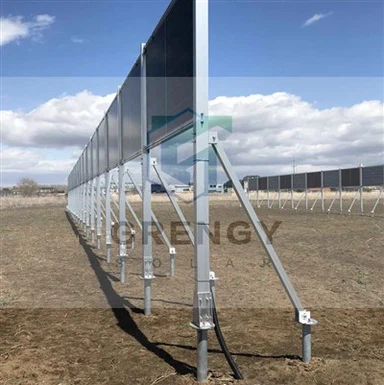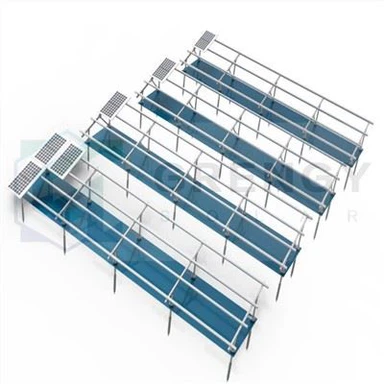




Solar Panel Ground Racking Systems
Material: Aluminum 6005-T5 & HDG or ZAM Steel
Max Wind Load: According to the projects request
Max Snow Load: According to the projects request
Solar Module Orientation: Portrait or Landscape
Application:Ground or Farm
Pre-assembled parts at the factory, fast and easy to install
OEM & Sample: Available
- Fast Delivery
- Quality Assurance
- 24/7 Customer Service
Product Introduction

who choose us?
Xiamen Grengy Photovoltaic Technology Co., Ltd., founded in 2007, specializes in R&D, design, manufacturing, and sales of diverse photovoltaic bracket products. Upholding the "Serve Customers and Create Value" principle, it offers high-quality, efficient, safe, and long-lasting products. With a professional and efficient R&D team, it supplies various photovoltaic bracket products of different specs and models..
one-stop solution
professional team
high quality
For more details, pls email:rukin@grengysolar.com
Solar panel ground racking systems refer to structures that are installed on the ground to support and position solar panels. Here's a more detailed explanation:
1. Purpose and Function
Support Structure:
The primary function of a ground-racking system is to hold solar panels at the correct angle and height. This angle is crucial as it determines the amount of sunlight the panels can capture throughout the day and across different seasons. For example, in regions closer to the equator, a shallower tilt angle might be more suitable to maximize sun exposure year-round, while in higher-latitude areas, a steeper angle can be adjusted to catch more sunlight during the winter months when the sun is lower in the sky.
The height of the racking system also matters. It should be sufficient to prevent shading from nearby objects such as bushes, fences, or other structures. Additionally, a proper height allows for air circulation beneath the panels, which helps in cooling the panels and maintaining their efficiency.
Orientation:
Ground racking systems are designed to orient the solar panels towards the sun's path. In the northern hemisphere, panels are generally facing south to capture the maximum amount of sunlight during the day. Some advanced racking systems have the ability to track the sun's movement, either in a single-axis (east-west tracking) or dual-axis (tracking both the azimuth and elevation of the sun). These tracking systems can significantly increase the energy output of the solar panels by ensuring they are always as perpendicular to the sun's rays as possible.
2. Components and Construction
Base and Foundations:
The base of the ground racking system is typically anchored to the ground through various foundation types. This can include concrete footings, helical piles, or ground screws. Concrete footings provide a solid and stable base, especially for larger solar installations. Helical piles and ground screws are more suitable for areas where the soil is less stable or for quicker installations. The choice of foundation depends on factors such as soil type, wind and snow loads, and the size of the solar array.
Rails and Frames:
Rails are the horizontal or slanted components that the solar panels are attached to. They are usually made of metal, such as aluminum or steel. Aluminum rails are lightweight and corrosion-resistant, making them a popular choice. The frames hold the rails in place and provide the overall structure of the racking system. They are designed to distribute the weight of the panels evenly and transfer any external forces (such as wind or snow loads) to the foundation.
Clamps and Fasteners:
Clamps are used to secure the solar panels to the rails. These need to be strong and durable to hold the panels in place, even during extreme weather conditions. The fasteners, including bolts, nuts, and washers, are used to assemble the various components of the racking system. High-quality fasteners are essential to ensure the integrity of the structure over the long - term.
3. Advantages of Ground Racking Systems
Space Utilization:
Ground-mounted solar panel systems can be installed in large open areas such as fields, vacant lots, or industrial sites. This allows for the installation of a significant number of panels, depending on the available space and energy requirements. It's an ideal solution for utility-scale solar power plants that need to generate a large amount of electricity to feed into the grid.
Accessibility for Maintenance:
Compared to roof-mounted systems, ground-racking systems are more accessible for maintenance and repair. Technicians can easily access the panels from all sides to clean them, check for damage, or perform other routine maintenance tasks. This ease of access can lead to lower maintenance costs and more efficient operation of the solar energy system over its lifetime.
Flexibility in Design:
Ground-racking systems offer more flexibility in terms of panel layout and configuration. They can be designed to fit different shapes and sizes of land areas. For example, an L - shaped or circular ground-mounted solar array can be constructed to adapt to the specific topography or space constraints of a site.

Hot Tags: solar panel ground racking systems, suppliers, factory, customized, custom, buy, Single Pole Mounting System, Single Row Solar Mounting System