




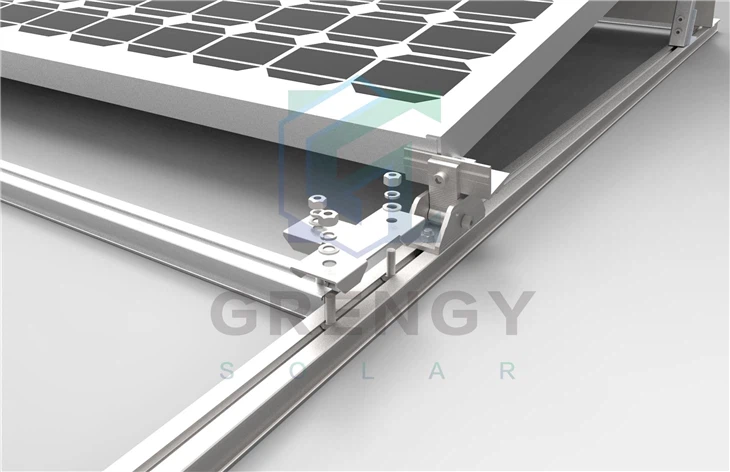
Flat Roof Pv Mounting Systems
Material: Aluminum 6005-T5 & HDG or ZAM Steel
Max Wind Load: According to the projects request
Max Snow Load: According to the projects request
Solar Module Orientation: Portrait or Landscape
Application:Ground or Flat Roof
Pre-assembled parts at the factory, fast and easy to install
OEM & Sample: Available
- Fast Delivery
- Quality Assurance
- 24/7 Customer Service
Product Introduction

who choose us?
Grengy is a well-known manufacturer specializing in the production of photovoltaic brackets, with rich experience and excellent reputation in the photovoltaic field.Our factory is equipped with advanced production equipment and technology. From the selection of raw materials to the manufacturing of finished products, quality is strictly controlled in every step.
one-stop solution
professional team
high quality
For more details, pls email:rukin@grengysolar.com
Ballasted Mounting Systems Advantages
Non - penetrating: The most significant advantage is that it doesn't require any holes to be drilled into the roof. This means there's a very low risk of roof leaks, which is a crucial consideration as roof leaks can lead to costly interior damage and mold growth. For example, in buildings with roofs that have complex waterproofing systems such as rubber - membrane roofs, a non - penetrating system helps maintain the integrity of the roof's waterproof layer.
Easier installation: Installation is relatively straightforward. There's no need for specialized roofing skills to install a ballasted system. The mounting frames are usually placed on the roof, and the ballast (like concrete blocks or gravel trays) is added. This simplicity can lead to lower installation costs and quicker installation times, making it a more accessible option for some property owners.
Versatility: These systems can be more easily adjusted or removed. If there's a need to reconfigure the solar panel array, move it to a different location on the roof, or even take it down completely, a ballasted system is generally more forgiving. For instance, in a rental property where the tenant's energy needs might change, or in a situation where the roof needs to be repaired or replaced, the panels can be more easily relocated.
Disadvantages
Weight concerns: The ballast adds a substantial amount of weight to the roof. This requires a careful assessment of the roof's load - bearing capacity. In some cases, older buildings or buildings with roofs not designed to handle heavy loads may not be suitable for ballasted systems. If the load - bearing capacity is exceeded, it can lead to roof damage or even structural problems.
Space requirements: The ballast takes up space on the roof. This can reduce the available area for other uses or for additional solar panels. Also, the need to distribute the ballast evenly means that the layout of the solar panel array might be more restricted compared to other mounting systems.
Wind stability: In areas with high winds, ballasted systems can be less stable. The weight of the ballast might not be enough to counteract strong wind forces, especially if the panels have a large surface area. This could lead to the panels being damaged or even dislodged, resulting in system failure and potential safety hazards.
Penetrating Mounting SystemsAdvantages
Stability: Penetrating mounting systems offer a high level of stability. By attaching the mounting hardware directly to the roof structure through penetrations, the solar panels are firmly anchored. This makes them highly suitable for areas with harsh weather conditions such as high winds, heavy snow, or seismic activity. For example, in a coastal area with frequent strong winds and storms, a penetrating system can ensure that the solar panels remain in place and continue to function.
Optimal tilt and orientation: These systems allow for more precise adjustment of the solar panel tilt and orientation. This is important for maximizing sunlight capture, especially in regions with specific sun - path characteristics. The ability to set the panels at the ideal angle for the local latitude can significantly increase the energy - generation efficiency of the solar system.
Disadvantages
Roof damage risk: The most obvious drawback is the need to penetrate the roof. This process requires careful installation to ensure that the roof is not damaged. If the penetrations are not properly sealed, it can lead to roof leaks, which can cause significant damage to the building's interior. The installation process also requires more specialized roofing skills and knowledge, increasing the complexity and cost of installation.
Less flexibility: Once installed, penetrating systems are less flexible than ballasted systems. Removing or reconfiguring the solar panel array can be more difficult and may cause more damage to the roof. This lack of flexibility can be a disadvantage in situations where the energy needs change or the roof needs to be repaired or replaced.
Hybrid Mounting SystemsAdvantages
Enhanced stability with fewer penetrations: Hybrid systems combine the stability of penetrating systems with the non - penetrating benefits of ballasted systems. By using a combination of techniques, they can provide a more stable installation than a pure ballasted system while reducing the number of roof penetrations compared to a fully penetrating system. This can be an excellent compromise in terms of roof integrity and stability.
Adaptability: They are well - suited to a wider range of roof types and conditions. The ability to adjust the balance between ballast and penetration allows for a more customized installation based on the specific requirements of the roof and the local climate. For example, in a situation where the roof has some areas that are more suitable for penetration and others where non - penetration is preferred, a hybrid system can be tailored accordingly.
Disadvantages
Complexity: Hybrid systems are more complex than either ballasted or penetrating systems alone. The installation requires a good understanding of both mounting methods and may involve more components and steps. This complexity can lead to higher installation costs and a greater potential for errors during installation.
Maintenance: The combination of different mounting techniques means that maintenance can be more complicated. There are more components to check and maintain, and any issues with either the penetrations or the ballast can affect the overall performance and stability of the system.

Hot Tags: flat roof pv mounting systems, suppliers, factory, customized, custom, buy, L Feet


