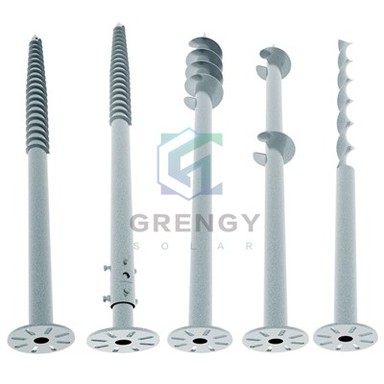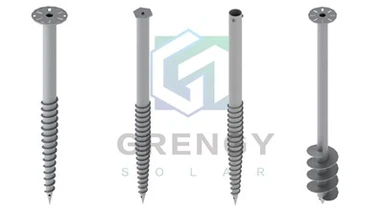




Screw Foundation Systems
Items: Grengy ground screws
Main Material: Hot-galvanized Steel Q235, High Class Hot-galvanized 80μ+
OEM & Sample: Available
Specification: Regular 800-3500mm & Customized/
- Fast Delivery
- Quality Assurance
- 24/7 Customer Service
Product Introduction
Xiamen Grengy Photovoltaic Technology Co., Ltd
Founded in 2007. It has a professional R&D team and 150 employees. Specializing in PV products like ground and roof brackets, it offers customized solutions. With business in over 100 countries, it holds multiple patents and certifications such as UL, TUV, CE, being a leading exporter.
Professional team
Our professionals have in-depth knowledge and rich experience in the field of photovoltaic technology, enabling the company to keep up with the international advanced level in product R & D and innovation
Certifications and Standards Compliance
The company's reputation is enhanced by its compliance with a wide range of international and domestic certifications. Having successfully passed UL, TUV, CE, CQC, SAA, AS/NZS1170

1000+
Projects completed
100+
Exported Countries
10GW+
Total Installed Capacity
60+
Patents
For more details,pls email:rukin@grengysolar.com
Screw foundation systems, also known as helical pile foundations, differ from traditional foundation types in several key ways:
Installation Method
- Screw Foundation Systems: These use a rotational installation process. Specialized equipment, from manual wrenches for small-scale projects to large hydraulic machines, rotates the helical piles into the ground. The helical blades on the piles act like screws, cutting through and displacing the soil as they're turned, allowing for a relatively quick and straightforward installation. There's no need for extensive excavation or drilling. For instance, in a residential deck project, a contractor can quickly screw in the piles with minimal disruption to the yard.
- Traditional Foundation Types: Methods such as strip foundations, pad foundations, or driven pile foundations involve more complex procedures. Strip foundations require digging trenches, pouring concrete, and waiting for it to cure. Driven pile foundations use heavy machinery to pound piles into the ground, which can be noisy, time-consuming, and may cause more soil disruption. Pad foundations also involve significant excavation to create a large, flat base for building support.
Soil Disturbance
- Screw Foundation Systems: Cause minimal soil disturbance. Since they are screwed in, there's no need to dig out large volumes of soil. This is highly beneficial in environmentally sensitive areas, like near wetlands or mature gardens, where preserving the existing soil structure and vegetation is crucial.
- Traditional Foundation Types: Often result in substantial soil displacement. Digging trenches or large pits for strip or pad foundations removes significant amounts of soil, which can disrupt root systems, wildlife habitats, and natural water drainage patterns. Driven piles can also compact the surrounding soil in an uneven manner.
Installation Time
- Screw Foundation Systems: Are known for their rapid installation speed. Depending on the project size and equipment used, a crew can install screw piles much faster than constructing traditional foundations. In a commercial building project, this speed can shave weeks off the construction schedule, getting the project to completion more quickly.
- Traditional Foundation Types: Generally take longer to complete. Concrete-based foundations need time for the concrete to set and cure, which can add days or even weeks to the overall construction timeline, especially in large projects.
Cost
- Screw Foundation Systems: Tend to be more cost-effective, especially for smaller projects. With shorter installation times, less labor, and reduced site preparation requirements, they can save money. Additionally, not having to pour large amounts of concrete cuts down on material costs.
- Traditional Foundation Types: Can be more expensive, particularly when factoring in the cost of concrete, formwork, and extended labor hours for excavation, pouring, and curing. For large-scale, high-rise building projects, though, traditional methods may sometimes be more suitable due to their ability to handle extremely high loads.
Adaptability to Soil Conditions
- Screw Foundation Systems: Are highly versatile and can work in a wide variety of soil types, including soft clays, sandy soils, and even some rocky formations. The depth of the piles can be adjusted during installation based on the soil's bearing capacity as detected by torque measurements.
- Traditional Foundation Types: Some traditional methods may struggle in certain soil conditions. For example, strip foundations may not be suitable for very soft or loose soils, and driven piles may have difficulty penetrating rocky ground without specialized equipment.
Environmental Impact
- Screw Foundation Systems: Have a lower environmental footprint. With less soil disturbance and no need for large amounts of concrete, they produce fewer emissions during construction and cause less harm to the surrounding environment.
- Traditional Foundation Types: Generate more environmental impact. The production and transportation of large volumes of concrete contribute to carbon emissions, and the extensive soil excavation can have long-term effects on local ecosystems.

Hot Tags: screw foundation systems, suppliers, factory, customized, custom, buy, Adjustable Screw Pile with Little Blades, Screw Pile with Big Blades, Double Pole Mounting System, Non adjustable Screw Pile with Little Blades