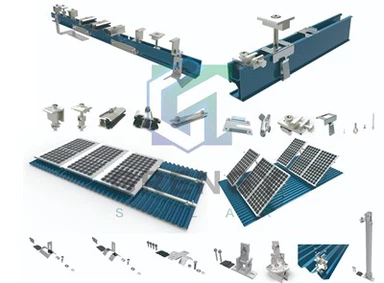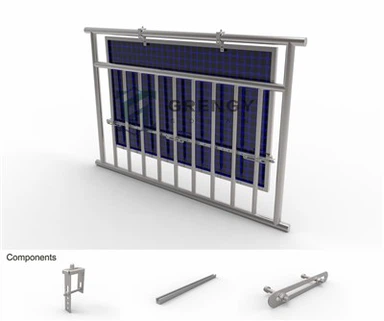




Aluminium Structure For Solar Mounting
Material: Aluminum 6005-T5
Max Wind Load: According to the projects request
Max Snow Load: According to the projects request
Solar Module Orientation: Portrait or Landscape
Application: Rooftop,Ground or Farm
Pre-assembled parts at the factory, fast and easy to install
OEM & Sample: Available
- Fast Delivery
- Quality Assurance
- 24/7 Customer Service
Product Introduction

who choose us?
Xiamen Grengy Photovoltaic Technology Co., Ltd., founded in 2007, specializes in R&D, design, manufacturing, and sales of diverse photovoltaic bracket products. Upholding the "Serve Customers and Create Value" principle, it offers high-quality, efficient, safe, and long-lasting products. With a professional and efficient R&D team, it supplies various photovoltaic bracket products of different specs and models..
one-stop solution
professional team
high quality
For more details, pls email:rukin@grengysolar.com
Aluminium structures are popular for solar mounting due to their lightweight nature, corrosion resistance, and relatively high strength. Here are the common types and their applications:
Types of Aluminium Solar Mounting Structures
Fixed Tilt Mounts
- Design: These are the simplest aluminium structures, consisting of frames with a set angle. The angle is often calculated based on the local latitude to optimize sunlight capture throughout the year. Rails are attached to the frame, and solar panels are then mounted onto these rails. The frames are typically made from extruded aluminium, which allows for easy manufacturing and customization.
- Application: Ideal for large-scale solar farms in areas with consistent sunlight patterns. They are cost-effective since they lack complex moving parts. For instance, in the southwestern United States, where the sun's path is relatively predictable, fixed-tilt aluminium mounts are commonly used to install vast arrays of solar panels, minimizing installation and maintenance costs.
Adjustable Tilt Mounts
- Design: As the name implies, these aluminium structures enable the adjustment of the panel tilt angle. They usually have a manual or automated mechanism for changing the angle a few times a year to account for seasonal variations in the sun's position. The frames need to be more robust to support the movement, but aluminium's strength-to-weight ratio makes it suitable for this task.
- Application: Well-suited for residential and small commercial solar installations. Homeowners can adjust the tilt in spring and autumn to improve energy production. In regions with more pronounced seasonal changes, like parts of Europe, adjustable tilt mounts help maximize the efficiency of solar systems over the course of the year.
Mounting System
- Specialized Mounting Kits: Standard solar panel mounting hardware won't work on tile roofs. Specialized tile roof mounting kits are essential. These kits typically include tile hooks, clamps, or brackets that are designed to grip the tiles without causing damage. The hooks or clamps need to be carefully selected based on the tile profile, size, and thickness to ensure a secure fit.
- Waterproofing: The installation process creates penetrations in the roof, which can be a major source of water leaks if not properly addressed. High-quality flashing materials, such as lead, copper, or synthetic rubber, must be used around the mounting points. Flashing is installed to divert water away from the roof penetrations, protecting the underlying roof structure from moisture damage.
Installation Process
- Skilled Labor: Installing solar panels on tile roofs demands a higher level of skill compared to flat or asphalt shingle roofs. Workers need to be familiar with tile roofing systems to avoid breaking tiles during installation. They must also have expertise in using the specialized mounting kits and properly applying waterproofing measures. In some regions, installers may need to be certified in tile roof solar panel installation.
- Time and Accessibility: The installation process on tile roofs often takes longer. The installer has to work more carefully to avoid tile damage, and the need to attach specialized hardware adds complexity. Additionally, tile roofs may be more difficult to access, especially on multi-story or steeply pitched buildings, which can impact safety and the overall efficiency of the installation.
General Applications of Aluminium Solar Mounting Structures
Residential Installations
- Aluminium structures are a great choice for homeowners because they are lightweight, making them easier to handle during installation. They also blend well with the aesthetics of most homes. Whether it's a simple fixed-tilt system on a suburban house or an adjustable tilt mount for a more energy-conscious homeowner, aluminium offers a practical and durable solution.
Commercial and Industrial Installations
- In commercial settings, aluminium's corrosion resistance is highly beneficial, especially in coastal areas or industrial zones with high humidity or pollution. The scalability of aluminium structures, from small office building rooftops to large factory yards, makes them suitable for projects of various sizes.
Utility-Scale Solar Farms
- For large solar farms generating power for the electrical grid, aluminium fixed-tilt mounts are often the go-to option. Their low cost per unit, combined with long-term durability and ease of installation in open fields, helps keep the overall cost of the project down while ensuring reliable energy production over decades.

Hot Tags: Aluminium Structure For Solar Mounting, suppliers, factory, customized, custom, buy