

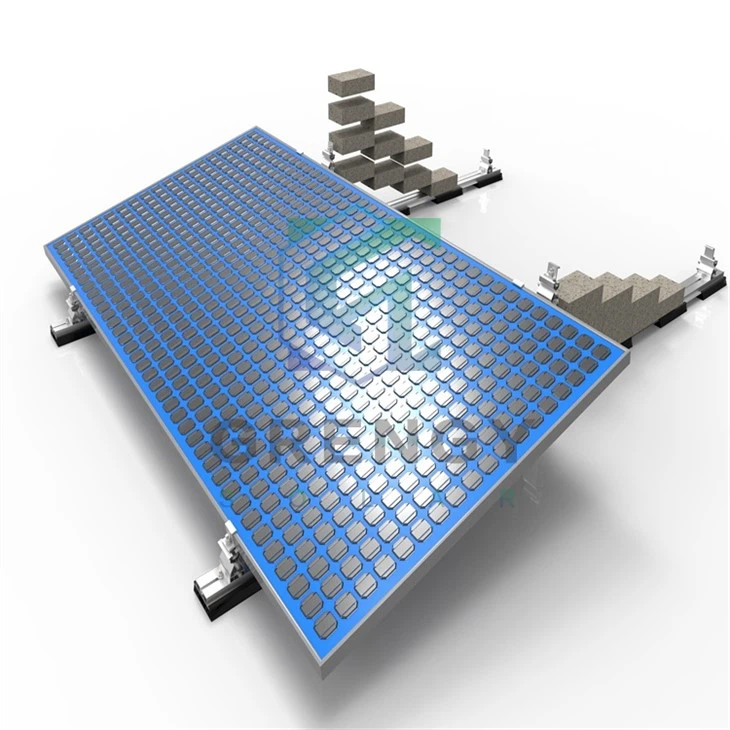




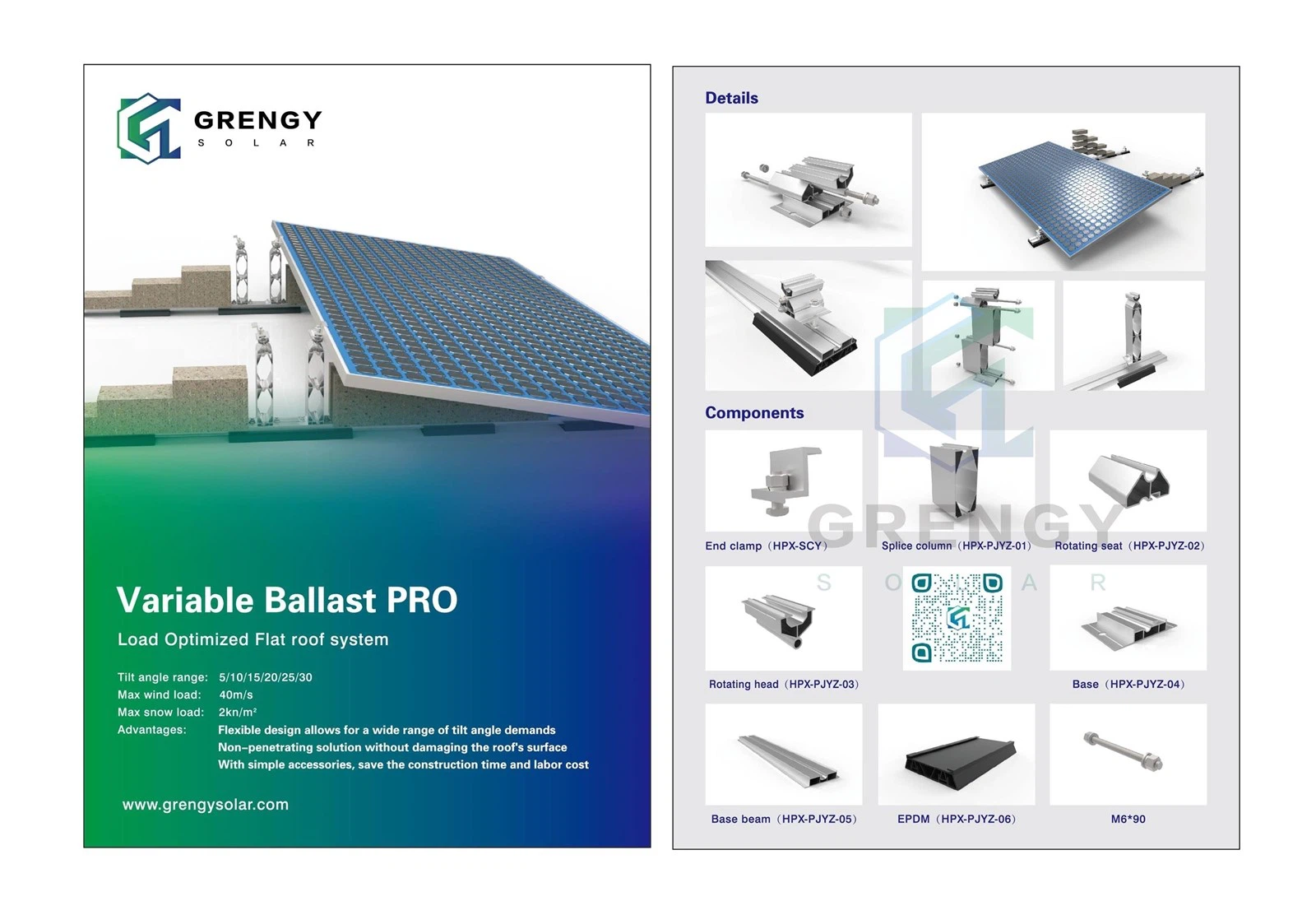
Flat Roof Solar Panel Mounting
Product type: solar panel roof mounting systems
Material: Aluminum alloy 6005
Max Wind Load : 40 m/s
Max Snow Load : 1.4 KN / M 2
Application: Concrete Roof
Solar Module Orientation: Horizontal/Portrait
OEM & Sample: Available
- Fast Delivery
- Quality Assurance
- 24/7 Customer Service
Product Introduction
Our address
713 Zhonghengji Building, No. 223, Qishan North Road, Huli District, Xiamen
Phone Number
+86-15060743485

When choosing the right flat roof solar panel mounting system, several factors need to be considered:
1. Roof Structure and Load - Bearing Capacity
Assessment: Before anything else, it's essential to clearly understand your roof's structure and load-bearing capacity. You can consult the building's original blueprints or have a structural engineer assess the roof. For example, a flat roof on a single-story building may have a different load-bearing capacity than a multi-story building's roof.
Load Calculation: Calculate the total weight of the solar panel system, including the panels themselves, mounting hardware, and any ballast (if using a ballasted mounting system). Make sure this total load is well within the roof's capacity. As a rule of thumb, the weight of the solar panel array should not exceed a certain percentage (usually specified by local building codes) of the roof's designed load-bearing capacity.
2. Roof Type and Condition
Roof Material: Different roofing materials require different mounting approaches. For example, a rubber-membrane roof may be more sensitive to penetrations than a concrete roof. If you have a built-up roof (BUR), a non-penetrating ballasted system might be a better choice to avoid damaging the multiple layers of roofing materials. On the other hand, a metal roof might be more suitable for a penetrating mounting system with proper waterproofing measures.
Roof Age and Condition: An older roof may have underlying issues such as weakened decking or hidden leaks. Addressing these problems before installing solar panels is crucial. A roof in poor condition may not be able to support a solar panel installation, or it could lead to premature failure of the panels due to water damage or instability.
3. Local Climate and Weather Conditions
Wind Loads: Areas prone to high winds require a more robust mounting system. Look for systems that have been tested and rated for high-wind resistance. Some mounting systems come with wind-deflecting features or additional bracing to withstand strong gusts. For example, in coastal regions or areas with frequent storms, a penetrating mounting system with deep-rooted anchors might be more appropriate.
Snow Loads: In regions with heavy snowfall, consider a mounting system that allows for proper snow shedding. A tilt-angle mount can help snow slide off the panels, preventing excessive weight buildup. Additionally, the spacing between panels should be sufficient to prevent snow from piling up and blocking sunlight or causing damage to the panels.
UV Exposure and Rain: The mounting system's materials should be able to withstand long-term exposure to ultraviolet (UV) radiation from the sun and frequent rain. High-quality, UV-resistant materials like anodized aluminum or stainless steel are often preferred to prevent corrosion and degradation over time.
4. Cost and Budget Constraints
Initial Cost: Different mounting systems have different price tags. Ballasted systems are generally less expensive in terms of installation costs since they don't require roof penetrations and the associated waterproofing work. However, the cost of the ballast material (such as concrete blocks or gravel) needs to be factored in. Penetrating systems may have higher installation costs due to the need for professional roofing work to seal the penetrations, but they can offer more stability in some cases.
Long-Term Costs: Consider the long-term maintenance and repair costs. A well-designed, durable mounting system may cost more upfront but can save you money in the long run by reducing the need for frequent repairs or replacements. For example, a high-quality, corrosion-resistant mounting system may have a longer lifespan and require less maintenance than a cheaper alternative.
5. Aesthetics and Building Design
Visual Impact: Consider how the solar panel mounting system will look on your flat roof. Some systems are more streamlined and less obtrusive than others. If the appearance of the building is a concern, you might choose a mounting system with a low-profile design or that can be integrated more seamlessly with the roof's architecture.
Building Regulations and Covenants: Check local building regulations and any homeowners' association covenants regarding the appearance and installation of solar panels. Some areas may have restrictions on the height, color, or placement of solar panel mounts.
Hot Tags: flat roof solar panel mounting, suppliers, factory, customized, custom, buy, L Feet