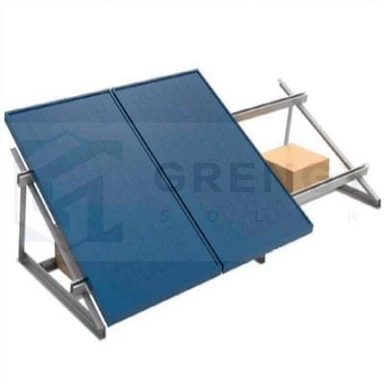




Solar PV Panel Ballast Flat Rooftop Non-penatration
System Name :Ballast roof mounting system
System design standard : AS/NZS1170、DIN 1055、JIS C8955: 2017
Installation site :flat rooftop & Ground
Foundation :concrete base
Material :Aluminium AL-6005 T5
Panel layout : landscape
Fasteners : SUS304 stainless steel
Color: silver or black
Wind load :60m/s
Snow load: 1.6KN/m2
Angle:5-10°
Warranty :15 yrs
- Fast Delivery
- Quality Assurance
- 24/7 Customer Service
Product Introduction
What is a ballasted system?
Ballasted solar racking is a mounting system for solar panels created for flat roofs with slopes of around one to seven degrees. They are generally circular or square frames made from industrial-grade plastic or aluminum, featuring top clamps for solar panels and a bottom “pan” that holds a counterbalancing weight.
Instead of relying on penetrations, sealant, and flashing like traditional methods, ballasted solar racking uses the power of gravity to physically weigh down panels to the structure. To keep panels in one place, solar installers set concrete blocks or landscaping pavers in the pan, although water jugs or sand are also sometimes used. The pan section is designed to reduce pressure points and prevent water pooling to protect the surrounding area.
Ballasted solar racking also has a pre-specified tilt to maximize productivity and reduce shading from surrounding panels, traditionally 10 degrees or below. This also ensures safety against wind lift by reducing the amount of drag that panels will encounter. Once installed, a ballasted solar system generally adds a distributed two to six pounds of extra weight per square foot, an amount that an up-to-date roof should easily handle.
Installation details:


Advantages of ballasted solar racking
There are a number of benefits to using a ballasted solar system instead of traditional roof racking. A ballasted system on your commercial roof offers:
Limited to no penetrations
Because a minimal number of holes are needed to install a ballasted system, there’s a reduced risk of leaks that could arise from the installation of the solar system. It also mitigates issues that can complicate roof warranties.
For property owners, it’s a simple tradeoff. A traditional racking system can create 100’s of penetrations that would need sealant, while a ballasted system generally only requires some added weight to the top of your structure. But, every project is different, and even ballasted solar racking could require a few anchors depending on location.
Flexible positioning
The unfixed nature of ballasted systems also make them easily moveable if a need arises. Suppose a new tenant moves into the building and needs to add a new AC unit, or if a particular section of the roof needs a patch. It’s simple to remove panels from their clamps, take weights out of their ballasts, and shift racking mounts without too much hassle. This creates easy access and allows for on-the-fly adjustments by maintenance teams.
Smoother installation
It’s also usually faster and cheaper for solar contractors to ballast solar panels instead of setting them on traditional residential racking. Because of their uniform size and shape, the mounts are easily stackable, reducing freight costs and transportation time to get them on site. Once there, most ballasted systems are also ready to go without pre-installation setup once unloaded from the pallets. This all creates a simpler experience for solar contractors and can lead to a faster time to operation.
Hot Tags: solar pv panel ballast flat rooftop non-penatration, suppliers, factory, customized, custom, buy, Ballast Mount Solar, Ballasted PV System, Flat Roof Ballasted Solar Racking, Ballasted Racking System, Solar Ballast, Ballasted Solar Racking