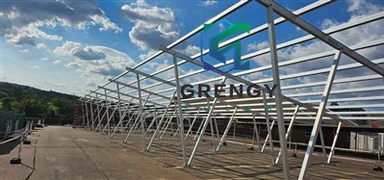


How Do Roof Mounted Solar Panels Work
Jul 18, 2025
Roof-mounted solar panels are a transformative technology that transforms sunlight into clean, renewable energy, reducing reliance on fossil fuels and slashing electricity bills. At Xiamen Huapuxin Energy Technology Co., Ltd., we specialize in designing and manufacturing high-performance solar mounting systems that ensure maximum efficiency, durability, and safety. Below, we break down how these systems work, their key components, and why they are a smart investment for homeowners and businesses alike.
The Science Behind Solar Energy Conversion
Solar panels operate through a process called the photovoltaic (PV) effect. Here's a simplified explanation:
Sunlight Absorption: Solar panels are made of semiconductor materials, typically silicon. When sunlight (composed of particles called photons) hits the panel, it excites electrons in the silicon cells, freeing them from their atomic bonds.
Electricity Generation: These free electrons flow through the panel's conductive metal contacts, creating an electric current. This direct current (DC) is then sent to an inverter, which converts it into alternating current (AC)-the type of electricity used by household appliances and the grid.
Energy Utilization: The AC electricity powers homes, businesses, or is stored in batteries for later use. Excess energy can even be fed back into the grid, earning credits through net metering programs.
This process is entirely silent, emission-free, and requires minimal maintenance, making solar energy one of the cleanest power sources available.
Key Components of a Roof-Mounted Solar System
A functional solar installation relies on several critical components working together seamlessly:
1. Solar Panels
Structure: Panels consist of tempered glass, aluminum frames, and photovoltaic cells. Tempered glass protects the cells from weather damage, while the frame ensures durability and secure mounting.
Types: Monocrystalline panels (high efficiency, sleek design) and polycrystalline panels (cost-effective, moderate efficiency) are the most common. Thin-film panels, though less efficient, are lightweight and flexible for unique roof types.
2. Mounting System
Racks and Rails: Aluminum or steel racks form the backbone, providing a stable platform for panels. Adjustable rails allow precise angling to optimize sunlight exposure.
Clamps and Fasteners: Stainless steel brackets secure panels to the roof without damaging the surface. Custom clamps accommodate various roof materials, from shingles to metal sheets.
Anchoring Solutions: For flat roofs, ballasted systems use weighted bases to avoid penetrations. Sloped roofs rely on L-feet or standoffs to prevent leaks and ensure stability.
3. Inverters
Function: Convert DC electricity from panels into usable AC power. Options include string inverters (centralized control) and microinverters (panel-level optimization).
Smart Features: Modern inverters track energy production, detect faults, and integrate with smart home systems for real-time monitoring.
4. Electrical Components
Wiring: DC and AC cables connect panels to inverters and the grid. Insulated, UV-resistant wires prevent energy loss and ensure safety.
Battery Storage (Optional): Lithium-ion batteries store excess energy for nighttime use or backup during outages, enhancing energy independence.
5. Waterproofing and Safety Systems
Flashings and Seals: Rubberized flashings redirect water away from roof penetrations, preventing leaks.
Grounding: Metal components are grounded to eliminate electrical hazards, especially during storms.
Installation Process: From Planning to Activation
A well-installed solar system requires meticulous planning and execution. Here's how Xiamen Huapuxin ensures perfection:
Step 1: Site Assessment
Roof Evaluation: Inspect structural integrity, slope, and shading. Flat roofs may need reinforcement, while sloped roofs require tilt adjustments.
Energy Audit: Calculate your household's energy needs to design a system that meets or exceeds consumption.
Step 2: System Design
Layout Optimization: Use CAD software to map panel placement for maximum sun exposure. Factors include roof orientation (south-facing is ideal in the Northern Hemisphere) and avoiding obstructions like trees.
Material Selection: Choose corrosion-resistant aluminum racks for coastal areas or reinforced steel for heavy snow regions.
Step 3: Mounting Installation
Rack Assembly: Secure rails to the roof using non-penetrating ballast blocks or L-feet. For tile roofs, specialized brackets prevent cracks.
Panel Mounting: Align panels on rails, clamp them firmly, and connect electrical components.
Step 4: Electrical Integration
Inverter Setup: Install the inverter near the main electrical panel. Connect panels via DC wiring and configure the system for grid-tied or off-grid use.
Safety Checks: Test for voltage leaks, ground faults protection, and proper insulation.
Step 5: Activation and Monitoring
Grid Connection: Coordinate with utility providers to activate net metering and feed excess energy back to the grid.
Monitoring Tools: Use mobile apps to track real-time energy production and consumption, ensuring optimal performance.
Advantages of Roof-Mounted Solar Systems
Maximized Space Utilization
Utilize underused roof areas without occupying valuable land or yard space.
Enhanced Energy Independence
Reduce reliance on the grid and protect against rising energy costs.
Environmental Benefits
Offset carbon emissions equivalent to planting hundreds of trees annually.
Increased Property Value
Homes with solar systems often sell faster and at higher prices.
Low Maintenance
Occasional cleaning and inspections are all that's needed to keep systems running smoothly.
Why Partner with Xiamen Huapuxin?
With over a decade of experience, we combine innovation, quality, and customer-centric design to deliver unmatched solar solutions:
1. Customized Solutions
Roof Adaptability: Whether you have a sloped tile roof, flat membrane, or metal sheeting, we design mounts tailored to your roof's unique challenges.
Scalability: Systems range from small residential arrays to large commercial installations.
2. Premium Materials
Anti-Corrosion Technology: Aluminum racks and galvanized steel components withstand humidity, saltwater, and UV exposure.
Lightweight Design: Minimize structural load without compromising strength, ideal for aging roofs.
3. Global Compliance
Certifications: ISO 9001, ISO 14001, and MCS certifications guarantee safety, efficiency, and environmental responsibility.
Warranties: Panels carry 25+ year performance warranties, and our mounting systems include 10-year structural guarantees.
4. Seamless Installation
Expert Team: Skilled technicians handle complex installations, from ballasted systems on flat roofs to tilt-mounted arrays on sloped surfaces.
Speed: Most residential systems are completed in 1–3 days with minimal disruption.
5. Post-Installation Support
Monitoring Services: Free access to our energy management platform for real-time performance tracking.
Maintenance Plans: Annual inspections to optimize efficiency and extend system lifespan.
Applications Across Industries
Our roof-mounted systems cater to diverse needs:
Residential: Homeowners achieve energy independence and reduce utility bills.
Commercial: Businesses leverage solar canopies for parking lots or warehouse rooftops to cut costs and boost sustainability.
Agricultural: Farms use solar mounts to power irrigation systems and greenhouses.
Rural Electrification: Off-grid installations provide reliable power to remote areas.
Future-Proofing Your Investment
Solar technology is evolving rapidly, and so are we:
Bifacial Panels: Capture sunlight from both sides for up to 20% higher yields.
Smart Tracking: Motorized systems adjust panel angles hourly for optimal light capture.
Battery Integration: Pair with lithium batteries for 24/7 energy supply.