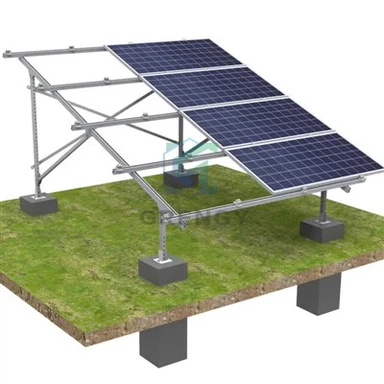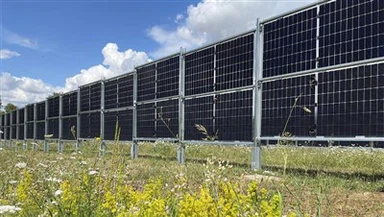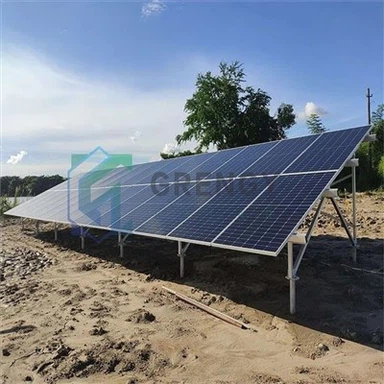




Mounting structure for solar panels
Item:mounting structure for solar panels
Tilt Angles:5°-60°
Material:AL6005-T5&SUS304&Q235B
Lead Time: 7-10 days
OEM & Sample: Available
- Fast Delivery
- Quality Assurance
- 24/7 Customer Service
Product Introduction
Xiamen Grengy Photovoltaic Technology Co., Ltd
Founded in 2007. It has a professional R&D team and 150 employees. Specializing in PV products like ground and roof brackets, it offers customized solutions. With business in over 100 countries, it holds multiple patents and certifications such as UL, TUV, CE, being a leading exporter.
Professional team
Our professionals have in-depth knowledge and rich experience in the field of photovoltaic technology, enabling the company to keep up with the international advanced level in product R & D and innovation
Certifications and Standards Compliance
The company's reputation is enhanced by its compliance with a wide range of international and domestic certifications. Having successfully passed UL, TUV, CE, CQC, SAA, AS/NZS1170

1000+
Projects completed
100+
Exported Countries
10GW+
Total Installed Capacity
60+
Patents
For more details,pls email:rukin@grengysolar.com
The choice of mounting structure significantly impacts the efficiency of solar panels in the following ways:
Angle of Incidence
- Fixed-Tilt Mounts:
- Optimal Latitude Angle: Fixed-tilt ground or rooftop mounts set at an angle close to the local latitude can capture a good amount of sunlight throughout the year. For instance, in the Northern Hemisphere, if a solar panel in a fixed-tilt mount is angled at around 30° - 40° (depending on the exact latitude), it aligns well with the sun's average position, maximizing the amount of direct sunlight it receives during midday. However, during summer when the sun is higher in the sky or winter when it's lower, the angle might not be perfect, leading to some loss of efficiency.
- Seasonal Variation: In regions with large seasonal differences, fixed-tilt mounts can't adapt, so they miss out on additional sunlight. In winter, a steeper tilt would be better to catch the lower-hanging sun, while in summer, a shallower angle is more favorable.
- Adjustable-Tilt Mounts:
- Customizable Angles: These mounts allow for seasonal adjustment of the panel angle. In temperate climates, users can change the tilt to match the sun's altitude better. For example, increasing the tilt from 20° to 45° in winter can significantly boost sunlight capture as the sun is lower in the sky, enhancing the efficiency of the solar panels during this period.
- Tracking Mounts:
- Dynamic Sun-Following: Single-axis and dual-axis tracking mounts continuously adjust the panel's position relative to the sun. Dual-axis tracking, the most precise, can follow the sun's azimuth (horizontal movement) and altitude (vertical movement) throughout the day. This means that the panels are always perpendicular to the sun's rays, maximizing the amount of light hitting the panels at any given time and significantly increasing the overall energy conversion efficiency.
Shading
Ground Mounts:
- Height and Spacing: The height of ground-mounted structures and the spacing between panels determine the amount of shading. Taller posts with proper panel spacing can reduce the likelihood of one panel shading another, especially during early morning or late afternoon when the sun is at a low angle. Incorrectly spaced panels in a ground mount can lead to significant shading losses, sometimes up to 20% or more in efficiency.
Rooftop Mounts:
- Roof Obstructions: On pitched rooftops, chimneys, vents, or nearby trees can cast shadows on solar panels. A well-planned mounting structure takes into account these potential obstructions. For flat rooftops, the design of the mounting system, such as ballasted or penetrative setups, can influence how panels are arranged to avoid self-shading. If a ballasted system's layout is haphazard, adjacent panels may shade each other, reducing the amount of sunlight available for conversion.
Pole Mounts:
- Elevation Advantage: Pole-mounted solar panels are often elevated above ground-level obstacles like shrubs or small buildings. This elevation minimizes shading from surrounding objects, allowing the panels to receive more sunlight and operate at higher efficiency.
Wind and Weather Resistance
Sturdy Structures:
- Ground Mounts: In windy areas, a robust ground mounting structure, like a tracking mount with a solid foundation, can keep panels stable. If panels are shaken or vibrated by strong winds, their electrical connections can be affected, and misalignment can occur, leading to decreased efficiency. A well-engineered ground mount withstands these forces, ensuring the panels remain in the optimal position for sunlight capture.
- Rooftop Mounts: For rooftops, proper installation of mounting brackets and rails is crucial. If the structure isn't firmly attached to the roof rafters or deck, wind can cause the panels to shift, breaking electrical connections or changing the angle of incidence. Adequate wind resistance in the mounting design helps maintain panel efficiency.
- Pole Mounts: Pole-mounted panels need to be firmly grounded and have a stable pole structure. High winds can topple poles if they're not properly installed, and any movement can disrupt the electrical system or change the panel's orientation, reducing efficiency.

Hot Tags: Mounting structure for solar panels, suppliers, factory, customized, custom, buy, Single Pole Mounting System, Single Row Solar Mounting System