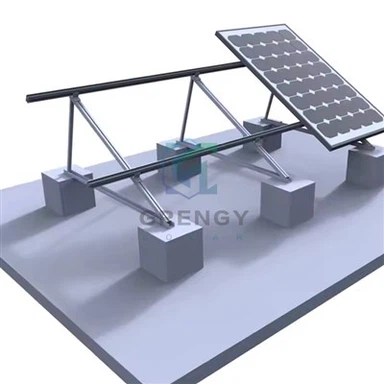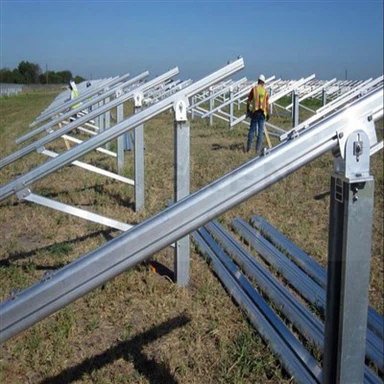




Ground Based Solar Panel Mounts
Material: Aluminum 6005-T5 & HDG or ZAM Steel
Max Wind Load: According to the projects request
Max Snow Load: According to the projects request
Solar Module Orientation: Portrait or Landscape
Application:Ground or Farm
Pre-assembled parts at the factory, fast and easy to install
OEM & Sample: Available
- Fast Delivery
- Quality Assurance
- 24/7 Customer Service
Product Introduction
Xiamen Grengy Photovoltaic Technology Co., Ltd
Founded in 2007. It has a professional R&D team and 150 employees. Specializing in PV products like ground and roof brackets, it offers customized solutions. With business in over 100 countries, it holds multiple patents and certifications such as UL, TUV, CE, being a leading exporter.
Professional team
Our professionals have in-depth knowledge and rich experience in the field of photovoltaic technology, enabling the company to keep up with the international advanced level in product R & D and innovation
Certifications and Standards Compliance
The company's reputation is enhanced by its compliance with a wide range of international and domestic certifications. Having successfully passed UL, TUV, CE, CQC, SAA, AS/NZS1170

1000+
Projects completed
100+
Exported Countries
10GW+
Total Installed Capacity
60+
Patents
For more details,pls email:rukin@grengysolar.com
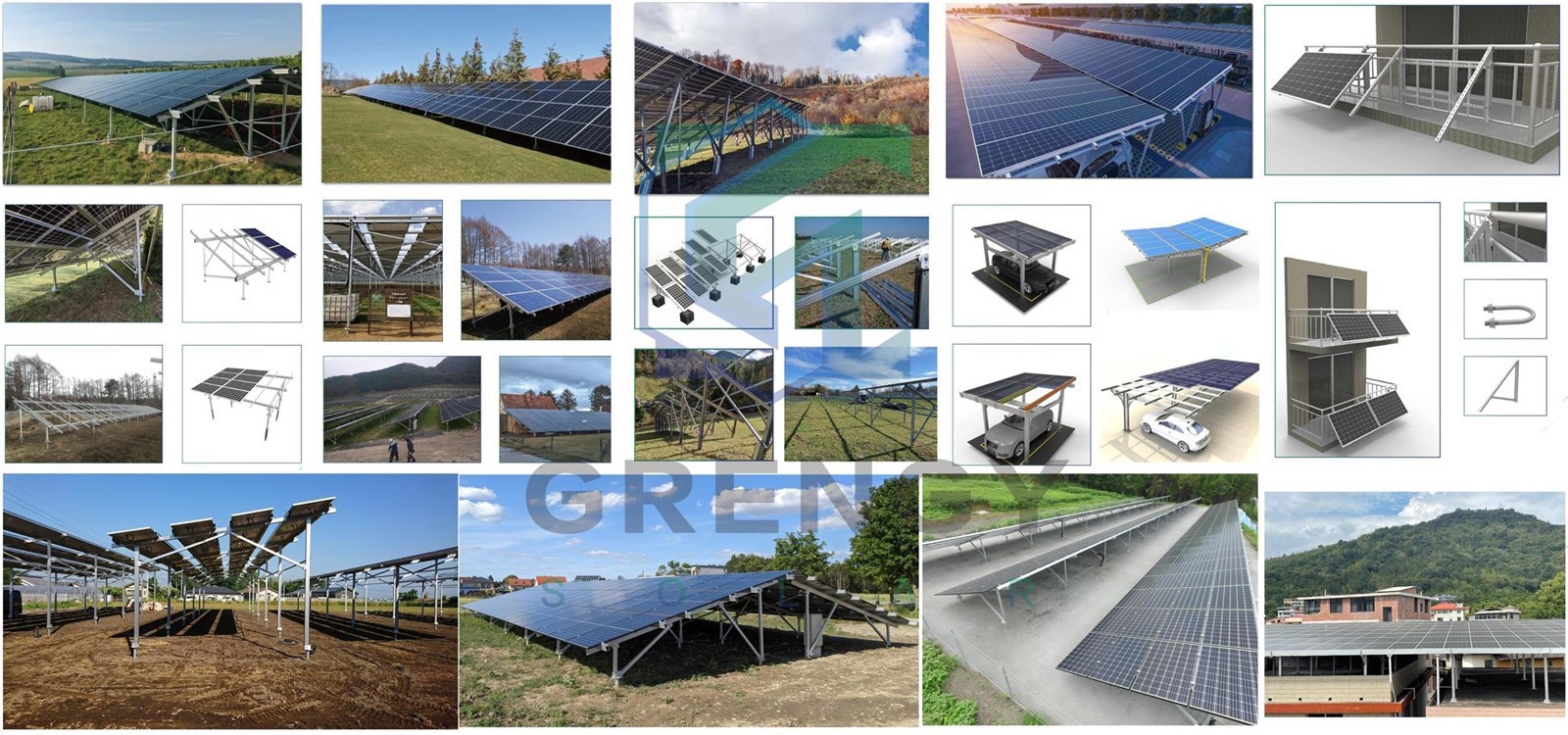
Ground based solar panel mounts are structures designed to support solar panels on the ground.Here are some key details:
Types:
- Fixed Tilt Mounts: These are set at a specific angle that is determined based on the location's latitude and the average annual solar path. For example, in the northern hemisphere, a common tilt angle might be around 30 to 45 degrees to capture the most sunlight throughout the year. They are simple in design and relatively inexpensive, making them a popular choice for large-scale solar farms where land is abundant and the focus is on maximizing energy production with a consistent tilt angle.
- Adjustable Tilt Mounts: As the name suggests, these mounts allow for the tilt angle of the solar panels to be adjusted. This is beneficial because the optimal tilt angle for solar panels changes with the seasons. In summer, a flatter tilt might be better to capture the higher sun, while in winter, a steeper tilt can increase the exposure to the lower sun. Some adjustable mounts can be manually adjusted a few times a year, while others are motorized and can be adjusted automatically based on the sun's position or a pre-programmed schedule.
- Pole Mounts: Solar panels are mounted on top of poles that are anchored into the ground. This type of mount can be useful in areas where the ground is uneven or has poor soil conditions that make traditional ground mounts difficult to install. Pole mounts can also provide better air circulation around the panels, which can help with cooling and potentially increase their efficiency. They are often used in agricultural settings where the panels can be placed above crops without taking up valuable ground space.
- Ballasted Mounts: These mounts rely on weights (ballasts) to hold the solar panels in place instead of being anchored into the ground. They are typically used in situations where ground penetration is not allowed or is difficult, such as on rooftops with limited structural integrity or on concrete surfaces. Ballasted mounts can be a good option for small to medium-sized solar installations where the cost and complexity of installing a traditional ground mount are prohibitive.
Advantages:
- Increased Sunlight Exposure: Ground mounts can be positioned and angled to optimize sunlight capture throughout the day and year, potentially increasing energy production compared to some rooftop installations that may have shading issues or less than optimal orientations.
- Easy Maintenance and Access: Since the panels are at ground level, they are generally easier to access for cleaning, inspection, and maintenance tasks compared to rooftop-mounted panels, which can reduce the time and cost associated with these activities.
- Scalability: Ground-based systems are highly scalable, making them suitable for both small residential installations and large utility-scale solar farms. It is relatively easy to add more panels or expand the system in the future as needed.
Disadvantages:
- Land Requirements: They require a significant amount of land, which can be a limiting factor in areas where land is scarce or expensive.
Installation Complexity: Depending on the type of ground mount and the soil conditions, installation can be complex and may require specialized equipment and expertise. For example, installing pole mounts may involve digging deep holes and ensuring proper anchoring to withstand wind and other loads.
- Aesthetics: Some people may consider large ground-mounted solar panel arrays to be visually unappealing, especially in natural or residential landscapes. This can be a concern in areas with strict zoning regulations or homeowner associations that have aesthetic guidelines.
Hot Tags: ground based solar panel mounts, suppliers, factory, customized, custom, buy, Single Row Solar Mounting System, Single Pole Mounting System