



Agricultural - Complementary Photovoltaic Mounting Structures
Material: Aluminum 6005-T5 & SUS 304 Stainless Steel
Max Wind Load : 60 m/s
Max Snow Load : 1.4 KN / M 2
Solar Module Orientation: Portait or Landscape
Application: Ground
Pre-assembled parts at factory, fast and easy to install
OEM & Sample: Available
- Fast Delivery
- Quality Assurance
- 24/7 Customer Service
Product Introduction

One-stop Solar Mounting Factory in China
We offer a wide variety of PV mounting structures for residential, commercial, and industrial projects. The products are made from high-quality aluminum alloys and galvanized steels for durability and corrosion resistance.
Our advanced production lines and skilled workforce ensure a strong manufacturing capacity. We adhere to strict quality control, from raw material sourcing to final assembly, meeting international and domestic standards.
Customization services are available. Our design team tailors solutions to unique project requirements, adapting to complex terrains and limited spaces.
After-sales support is a priority. Our professional team provides technical guidance, maintenance, and repair assistance. We also offer warranties to protect customer interests. us for reliable, high-quality PV mounting solutions and join us in advancing the renewable energy industry.
For more details,pls email:rukin@grengysolar.com
Agricultural - Complementary Photovoltaic Mounting Structures Details
I. Structural Design
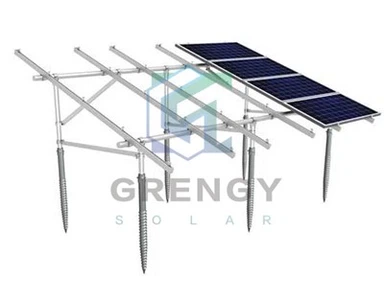
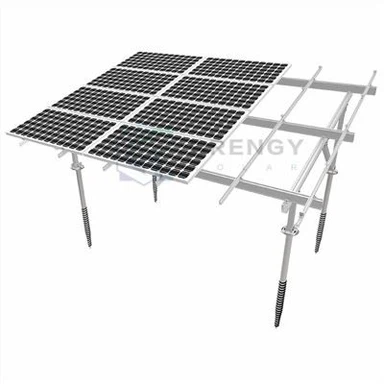
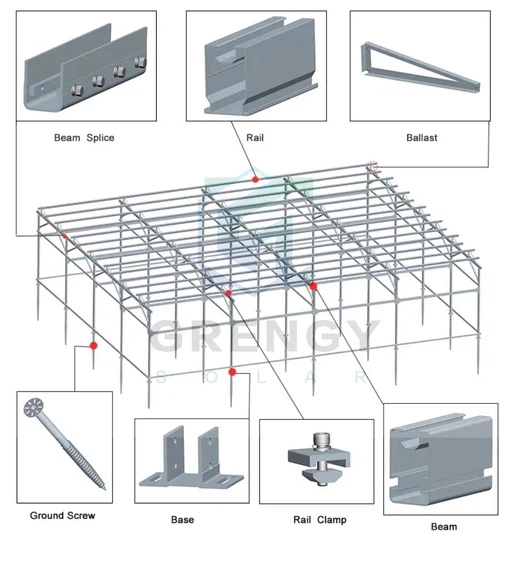
The mounting structures are typically designed to be adjustable in height. This allows for flexibility in accommodating different crop growth stages and sunlight requirements. For example, during the early growth period of crops, the photovoltaic panels can be raised to a higher position to ensure sufficient sunlight reaches the plants. As the crops grow taller, the panels can be lowered. The frames are usually made of lightweight yet durable materials such as aluminum alloy or galvanized steel. Aluminum alloy offers good corrosion resistance and is suitable for outdoor agricultural environments. The structure also includes a stable base, which can be in the form of ground screws or concrete footings. Ground screws are often preferred in agricultural settings as they cause less soil disruption and are easier to install and remove if needed.
II. Sunlight Optimization
To maximize the efficiency of the photovoltaic system while minimizing the impact on crop growth, the mounting structures are engineered with a specific tilt angle. The tilt angle is determined based on the geographical location and the solar path throughout the year. In regions closer to the equator, a shallower tilt angle may be sufficient, while in higher latitudes, a steeper angle is required. Additionally, some advanced designs incorporate a tracking mechanism. These tracking mounts can follow the movement of the sun from east to west during the day, ensuring that the photovoltaic panels are always perpendicular to the sun's rays as much as possible. This significantly increases the power generation compared to fixed mounts. However, the tracking mechanism needs to be carefully designed to avoid casting excessive shadows on the crops.
III. Compatibility with Agricultural Activities
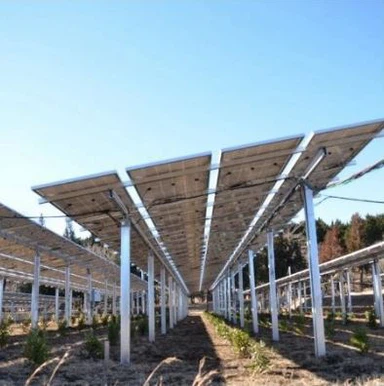
The spacing between the mounting structures is carefully calculated to allow for convenient access for agricultural machinery and farming operations. Wide enough aisles are provided for tractors, sprayers, and harvesters to move through without obstruction. The height of the lowest part of the structure above the ground is also considered to ensure that there is enough clearance for equipment and for farmers to perform tasks like weeding and pruning. Some designs even integrate features such as drip irrigation systems or trellises for climbing plants. The drip irrigation lines can be attached to the mounting structure, saving space and providing a more organized layout for watering the crops. Trellises can be incorporated to support vine - like crops, making use of the vertical space and coexisting harmoniously with the photovoltaic installation.
IV. Durability and Maintenance
Given the harsh outdoor conditions in agricultural fields, the mounting structures are built to withstand various environmental stresses. The materials used are resistant to corrosion from moisture, pesticides, and fertilizers. Regular maintenance is required to ensure the long - term performance of the structures. This includes checking the tightness of bolts and screws, inspecting for any signs of damage or corrosion, and cleaning the photovoltaic panels to remove dirt, dust, and bird droppings that can reduce power output. Some manufacturers also offer warranties and after - sales services to provide support for the installation and maintenance of these agricultural - complementary photovoltaic mounting structures.

Hot Tags: agricultural - complementary photovoltaic mounting structures, suppliers, factory, customized, custom, buy, Single Row Solar Mounting System, Single Pole Mounting System