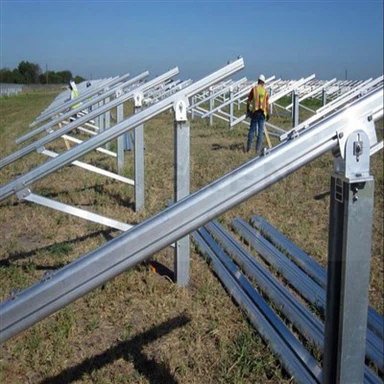




Solar Panels Installed On The Ground
Material: Aluminum 6005-T5 & HDG or ZAM Steel
Max Wind Load: According to the projects request
Max Snow Load: According to the projects request
Solar Module Orientation: Portrait or Landscape
Application:Ground or Farm
Pre-assembled parts at the factory, fast and easy to install
OEM & Sample: Available
- Fast Delivery
- Quality Assurance
- 24/7 Customer Service
Product Introduction
some statistics about us you must know
Choose the mounting solution that suits you best.
17+
Years of experience
36
%
TECHNICIANS & WORKERS
1000
+
SATISFIED CUSTOMERS
1000+
completed projects
Product Diversity
It offers various mounting systems, including roof, ground, carport, and pole-mounted ones. The roof-mounted systems can fit different roof types, while the ground-mounted ones provide stable support for large-scale solar panel arrays. Carport-mounted systems combine parking and power generation functions, and pole-mounted systems offer flexible installation options.
Quality and Customization
High-quality materials like aluminum 6005-T5, stainless steel 304, and Q235 are used to ensure durability. The company provides customization services, adjusting the tilt angle and support strength according to regional and customer requirements, and offering calculation sheets.
Professional Team
With a professional R&D and manufacturing team, it keeps up with industry trends, innovates designs, and follows strict quality control in production.
Global Market
Its products are exported to over 100 countries and regions, meeting diverse international market demands and winning customer trust.
For more details,pls email:rukin@grengysolar.com
Here are the details of ground - installed solar panels:
Site Selection
- Sunlight Exposure: The site should have maximum sunlight throughout the day. It's ideal to avoid areas shaded by trees, buildings, or other structures. A southern - facing slope (in the northern hemisphere) can enhance sunlight capture, but flat areas can also work well with the proper tilt of the panels.
- Ground Stability: The ground needs to be stable enough to support the weight of the panels and the mounting structure. Avoid areas with loose soil, such as sandy or marshy regions, unless special foundation measures are taken. Also, consider potential soil movement due to factors like erosion or frost heave.
Mounting Structure
- Materials: Commonly, aluminum or steel is used for the mounting frame. Aluminum is lightweight and corrosion - resistant, while steel offers high strength. The choice depends on factors such as the size of the installation, local climate, and budget.
- Design: The structure must be designed to hold the solar panels securely. It includes rails to which the panels are attached and a support system that is anchored to the ground. The height of the structure is usually determined by factors such as snow clearance (in snowy regions) and ease of access for maintenance.
Panel Installation
- Tilt and Orientation: The tilt angle of the panels can be adjusted based on the latitude of the location. As a general rule, a tilt angle equal to the local latitude can provide good year - round performance. The orientation should be as close to true south (in the northern hemisphere) as possible to capture the most sunlight during the day.
- Attachment: Solar panels are attached to the mounting rails using clamps. These clamps need to be strong enough to withstand wind and other environmental forces and are adjustable to fit different panel sizes and thicknesses.
Electrical Connections
- Wiring: Cables are used to connect the solar panels in series or parallel, depending on the desired voltage and current output. The wiring needs to be protected from the elements, usually by running it through conduit pipes.
- Inverter Installation: An inverter is installed near the solar panel array to convert the direct current (DC) electricity generated by the panels into alternating current (AC) electricity that can be used in the home or fed into the grid. The inverter's size and location depend on the power output of the panels and the requirements of the electrical system.
Foundation and Anchoring
- Anchoring Methods: The mounting structure can be anchored to the ground using concrete footings, ground screws, or other methods. Concrete footings provide a solid base and are suitable for larger installations. Ground screws are quicker to install and can be a good option for smaller systems.
- Load - Bearing Capacity: The anchoring system must be designed to withstand the uplift and lateral forces exerted by wind and snow. Engineers calculate the required depth and strength of the anchors based on the size of the panel array, local wind and snow loads, and soil type.

Hot Tags: solar panels installed on the ground, suppliers, factory, customized, custom, buy, Single Pole Mounting System, Single Row Solar Mounting System