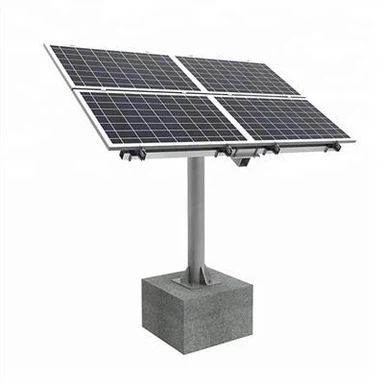




Aluminum Ground Mounting System
Material: Aluminum 6005-T5
Max Wind Load: According to the projects request
Max Snow Load: According to the projects request
Solar Module Orientation: Portrait or Landscape
Application:Ground or Farm
Pre-assembled parts at the factory, fast and easy to install
OEM & Sample: Available
- Fast Delivery
- Quality Assurance
- 24/7 Customer Service
Product Introduction
Xiamen Grengy Photovoltaic Technology Co., Ltd
Founded in 2007. It has a professional R&D team and 150 employees. Specializing in PV products like ground and roof brackets, it offers customized solutions. With business in over 100 countries, it holds multiple patents and certifications such as UL, TUV, CE, being a leading exporter.
Professional team
Our professionals have in-depth knowledge and rich experience in the field of photovoltaic technology, enabling the company to keep up with the international advanced level in product R & D and innovation
Certifications and Standards Compliance
The company's reputation is enhanced by its compliance with a wide range of international and domestic certifications. Having successfully passed UL, TUV, CE, CQC, SAA, AS/NZS1170

1000+
Projects completed
100+
Exported Countries
10GW+
Total Installed Capacity
60+
Patents
For more details,pls email:rukin@grengysolar.com
An aluminum ground mounting system is a structure used to support solar panels at ground level. Here are its key characteristics:
Components
- Posts and Legs: Made of aluminum, these form the vertical support elements. Aluminum is chosen because it's lightweight yet strong enough to hold the weight of the solar panels, even under windy conditions. The posts can be driven directly into the ground, or they may use concrete footings for added stability. Their height can be adjusted in some systems, which is useful for optimizing panel tilt or accommodating uneven terrain.
- Rails: Aluminum rails are horizontally attached to the posts. They create a flat, level platform for the solar panels to sit on. These rails are often extruded, meaning they are formed by pushing aluminum through a die, resulting in a consistent shape with high precision. The extrusion process also allows for custom shapes and sizes to fit different panel dimensions and installation requirements.
- Panel Clamps: These are specialized clamps made from aluminum or aluminum alloys. They securely fasten the solar panels to the rails, preventing the panels from shifting, vibrating, or being dislodged by wind. The clamps are designed to fit the edges of the panels precisely, ensuring a tight connection.
- Base Plates and Connectors: Base plates, which are also aluminum, distribute the weight of the panels more evenly across the rails. Connectors are used to join different sections of the rails or posts together, providing a modular and flexible installation. These components are typically designed for easy assembly and disassembly, which simplifies installation, maintenance, and potential system expansion.
Types
- Fixed Tilt Systems: The most common type, where the panels are set at a fixed angle, usually determined by the local latitude. This simple design minimizes the number of moving parts, reducing the risk of mechanical failures. It's cost-effective and suitable for large-scale solar farms or small residential installations where the focus is on straightforward, reliable energy production.
- Adjustable Tilt Systems: These allow for the adjustment of the panel angle, either manually or via automated mechanisms. Seasonal changes in the sun's position mean that different tilt angles can optimize sunlight capture. For example, a steeper tilt in winter and a flatter one in summer can improve overall energy yield. Aluminum's lightweight nature makes it easier to incorporate adjustable features without overloading the support structure.
- Single-Axis Tracking Systems: Here, the solar panels pivot on a single axis, typically following the east-to-west movement of the sun during the day. Aluminum is an ideal material for these systems because its low density keeps the overall weight of the tracking structure down, reducing the energy required to move the panels. This enables more efficient tracking and higher energy production compared to fixed-tilt systems.
Multi-Axis Tracking Systems: The most advanced option, multi-axis tracking systems can adjust the panels in multiple directions. Aluminum's ability to be fabricated into complex shapes and its strength-to-weight ratio are crucial for building these high-precision structures. Although more expensive, they offer the highest level of sunlight capture and are suitable for applications where maximizing energy output is a top priority.
Advantages
- Lightweight: Aluminum is significantly lighter than steel, making the entire ground mounting system easier to transport, handle, and install. This can reduce labor costs, especially for large installations.
- Corrosion Resistance: It naturally forms a thin oxide layer when exposed to air, protecting it from further corrosion. This means the mounting system can withstand outdoor environments, including humid or coastal areas, without significant rusting or degradation over time.
- Modularity and Flexibility: The components of an aluminum ground mounting system are often modular, allowing for easy expansion, modification, or disassembly. If you want to add more panels to your system or reconfigure the layout, it can be done relatively simply.
- Aesthetics: Aluminum has a clean, modern look that can blend well with the surrounding environment, whether it's a rural solar farm or a residential backyard installation.

Hot Tags: aluminum ground mounting system, suppliers, factory, customized, custom, buy, Single Pole Mounting System, Single Row Solar Mounting System